
Solid Minds at ALCHE’s First Wellness Week: A Transformative Journey in Holistic Student Wellness
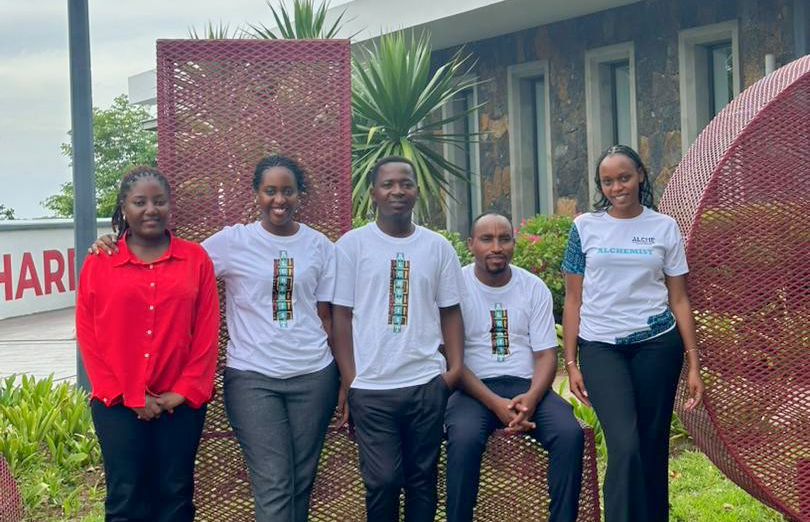
During the week of December 15–19, 2025, Solid Minds Counselling Clinic partnered with the African Leadership College of Higher Education (ALCHE) for the institution’s first-ever Wellness Week—an immersive initiative designed to promote mental health, wellbeing, and community connection among students. This collaboration was made possible through both institutions’ partnerships with the Mastercard Foundation, which advances holistic student support across the continent.
The week brought together students, interns, staff, counselors, faculty, university leadership, and external partners in a co-created experience that recognized students not just as beneficiaries of wellness programming, but as active contributors, leaders, and partners in shaping a healthier campus culture.
Mauritius: A Vibrant Context for Wellness Week
ALCHE, with about 180 students currently enrolled across four undergraduate programs BSc. Entrepreneurial Leadership, BSc. International Business and Trade, BSc. Computer Science, and BSc. Software Engineering places strong emphasis on holistic development and leadership.
The student community thrives in a multilingual and ethnically diverse environment, where local students Indo‑Mauritians, Creoles, Sino‑Mauritians, and Franco‑Mauritians interact with international students from various African countries, creating a rich and vibrant mix of cultures.
Kicking Off Wellness Week
The Wellness Week was officially opened by ALCHE Dean, Jeremy Ruiters, whose thought-provoking address set a powerful tone for the entire week. He reminded participants that “if you don’t make time for wellness, you will be forced to make time for your illness,” a message that resonated deeply with everyone present. Following the opening, a Fireside Chat and Multidisciplinary Panel Discussion on Youth Mental Health brought together experts from different fields to explore key issues affecting young people today, including social media use, stigma, and anxiety. The session featured:
- Jean Pierre Ndagijimana ( Dr. JPN), Senior Regional Manager of Strategy and Partnerships at Solid Minds Counselling Clinic
- Ms. Joann Davenia Permall, Lecturer at the Mauritius Institute of Education specializing in Pedagogy and Philosophy of Education.
- Nazeerah Golamnobee-Foondun, Pedopsychiatrist at the Ministry of Health and Wellness of Mauritius.
The discussions were lively and interactive, with participants engaging deeply through thoughtful questions, highlighting that wellness is not only a personal responsibility but also a collective effort shaped by dialogue, understanding, and shared learning.
Psychological First Aid: Equipping for Impact
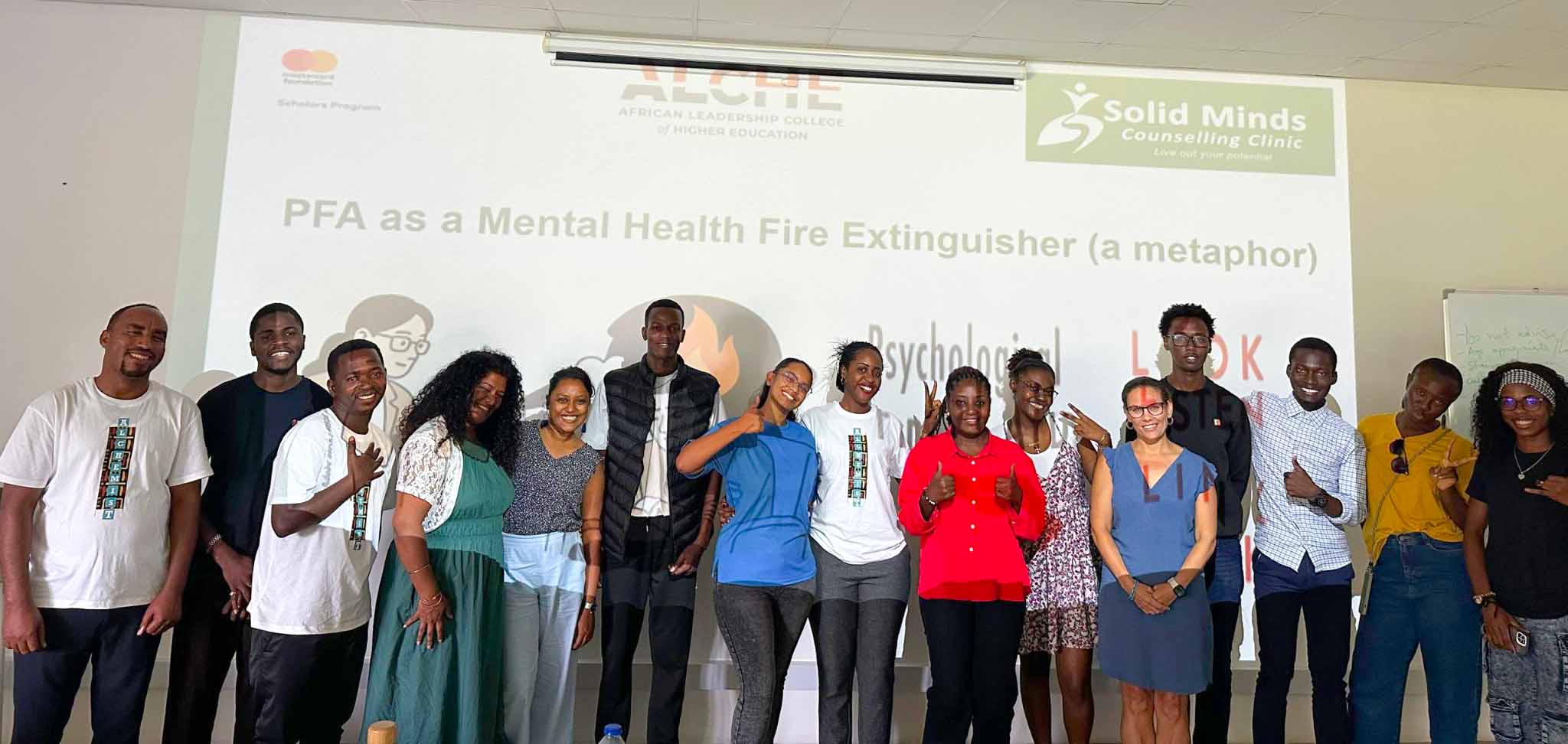
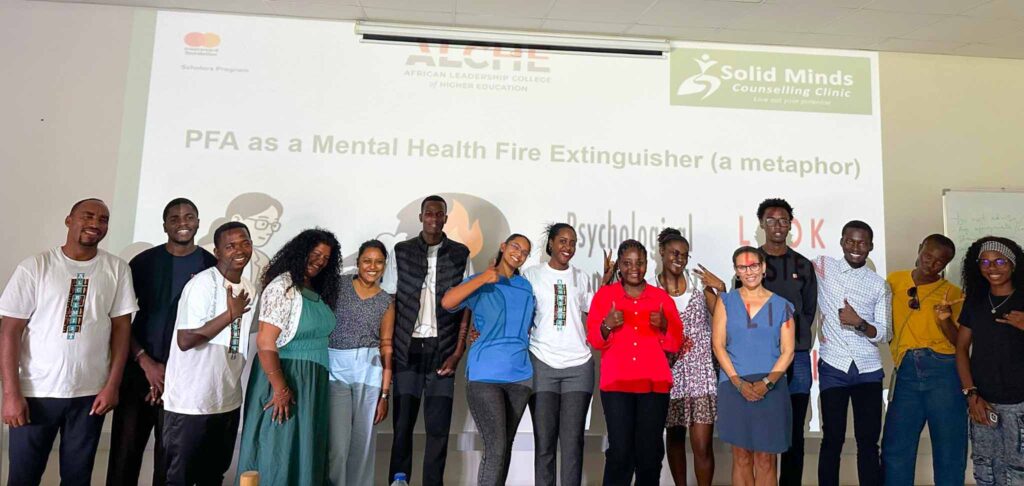
On December 16th, the Solid Minds Counselling Clinic team facilitated a Psychological First Aid (PFA) training. Normally conducted over three days, we condensed the essentials into a half-day session. Topics included mental health, stress, trauma, and the three core principles of PFA look, listen, and link.. To make the session engaging, icebreakers were included, bringing the training to life. This part of the program is always a hit, consistently engaging all attendees and fostering a positive, collaborative environment.
The session was highly interactive, with participants engaging in group activities that simulated real-life scenarios. At the end, one participant shared:
“…..so much I learned. It was beyond my expectations. I learned how to better support myself first as a PFA, and then others who need immediate support.”
The energy and enthusiasm in the room were palpable, and it was rewarding to see participants leave with practical skills they could immediately apply.
Fun and Mindfulness: Moving Beyond the Classroom
Wednesday, December 17th, combined fun, movement, and mindfulness. The morning began with a Karate session, led by school counselor Gianeswaree Caully and a coach, both black belts. At first, the idea of Karate in a wellness program seemed surprising to me, but it quickly became clear how it connected to wellness. The session offered a full-body workout, laughter, and confidence-building, demonstrating that wellness encompasses both mental and physical health. By the end, participants felt empowered, exhilarated, and exhausted in the best possible way.
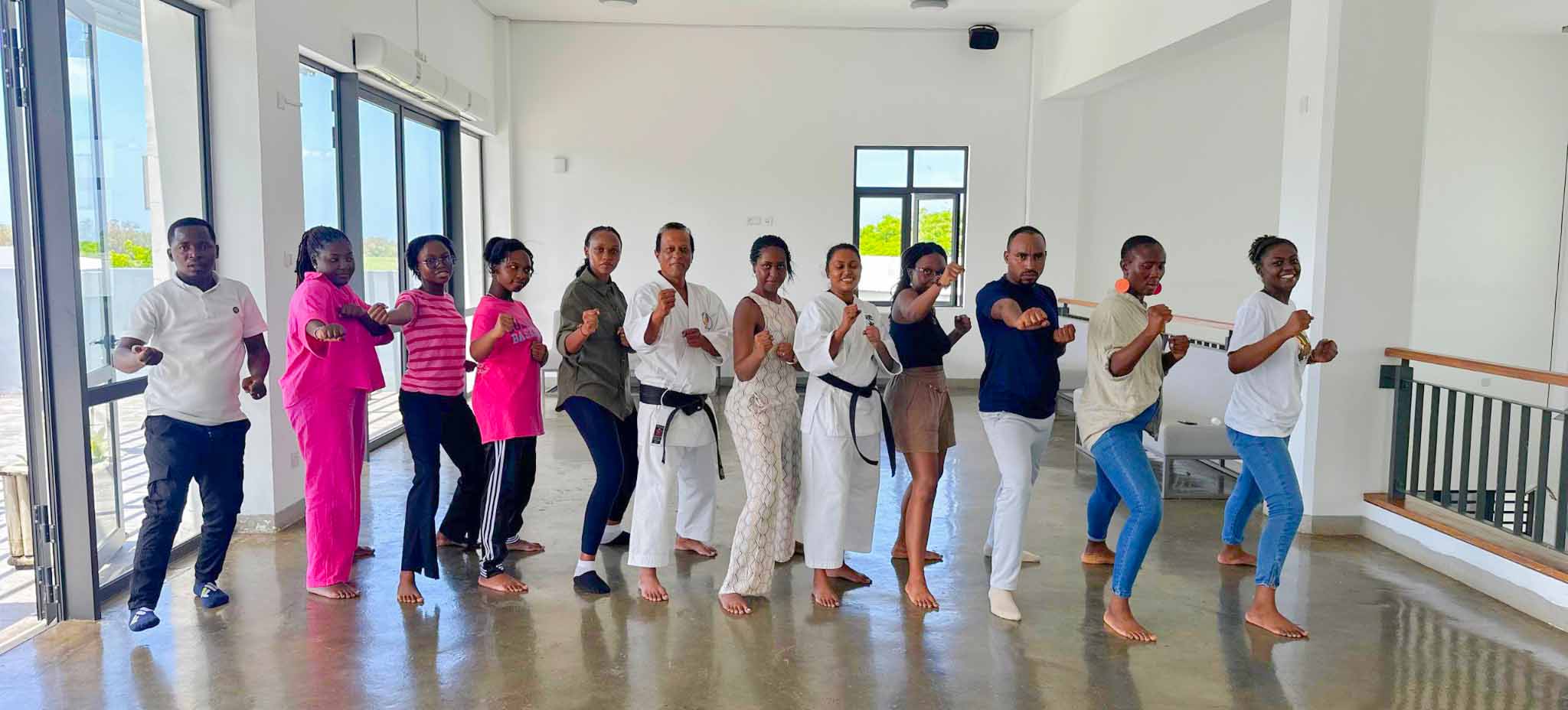
The karate session was exciting! It taught me not only how to defend myself physically but also how to stay calm, focused, and resilient under pressure. As the karate session concluded,, Damien Niyonsaba, a psychiatrist nurse at Solid Minds shared, reflected, “I feel more confident handling challenges, both mentally and physically”
Later, we experienced Mindfulness through Drama, led by Joan Davenia Permall, Lecturer at the Mauritius Institute of Education specializing in pedagogy and Philosophy of Education. This innovative technique combines mindfulness practices with theatrical exercises to help participants become more present, self-aware, and emotionally expressive. Activities ranged from playful movements and running to quiet reflection and sharing in a circle. Participants were encouraged to connect with their emotions freely, illustrating that safe spaces are best created through experience and interaction, not just theory. To help us better understand the exercises, the facilitator explained:
“Drama is often mistaken for theatre, but it is much more than performance; it is a reflection of the human experience. Drama engages people with themselves on every level, offering an excellent way to understand holistic education. It exercises the mind, memory, and cognition, while also fostering emotional connection and self-awareness. Drama encourages participants to explore their feelings: what they feel, why they feel it, how they usually express it, and how they might choose to express it differently. It gives people the opportunity to shape and reshape their being through their emotions and experiences.” — Joan Davenia Permall
What Joan enjoys most about drama is how it repositions the body, which is especially valuable since we spend so much time sitting in school chairs often to our detriment. Through mindfulness through drama, there are no chairs; participants can move freely, relax their bodies, and fully engage in the experience.
This session reminded me that we often don’t take enough time to truly appreciate ourselves or connect with who we are. For me, this was a moment of connecting and reconnecting with myself. We began with a game celebrating our names. Usually, we say our names in a formal or casual way, but this exercise turned it into a celebration of who we are.
Drama, for me, became a way of connecting my mind, my being, and my feelings. During the exercises, we imagined walking through elements of nature, and our bodies responded to the imagination, creating real feelings in the moment. This interconnection of the mind, the body, the feelings is exactly what holistic education is about: interconnectedness, wholeness, and sacredness.
“The session on mindfulness through drama was enjoyable and helped students connect with their inner selves. I loved seeing them openly share their struggles, creating a safe and trusting space.” – Pacifique Igiraneza a staff at Solid Minds Counselling Clinic
Connecting Through a Mindful Walk
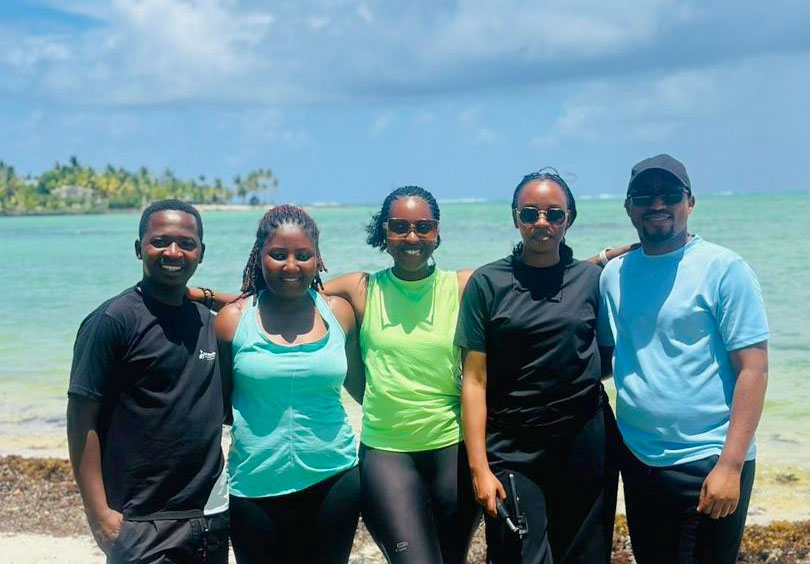
On Thursday, December 18th, after a busy week of indoor sessions, including panels, Psychological First Aid training, Karate, and mindfulness-through-drama, we joined students for a calm, mindful walk through the park. The walk gave students a relaxed outdoor space to slow down, enjoy nature, and connect with each other. Conversations flowed naturally in small groups or pairs, with simple gestures like saying hi, asking someone’s name, or offering a hand on the uneven volcanic rocks often leading to longer chats. When students connected with peers from their home countries, taking a short break from English, we could hear a mix of African languages, with Swahili, Kinyarwanda, and Mauritian Creole in particular.
My personal highlight was encountering a tortoise up close. Its calm, steady gaze drew smiles and sparked conversation among us. It was my first time seeing a tortoise face to face, and when it looked at me, there was a strange sense of familiarity, as if we had met before.
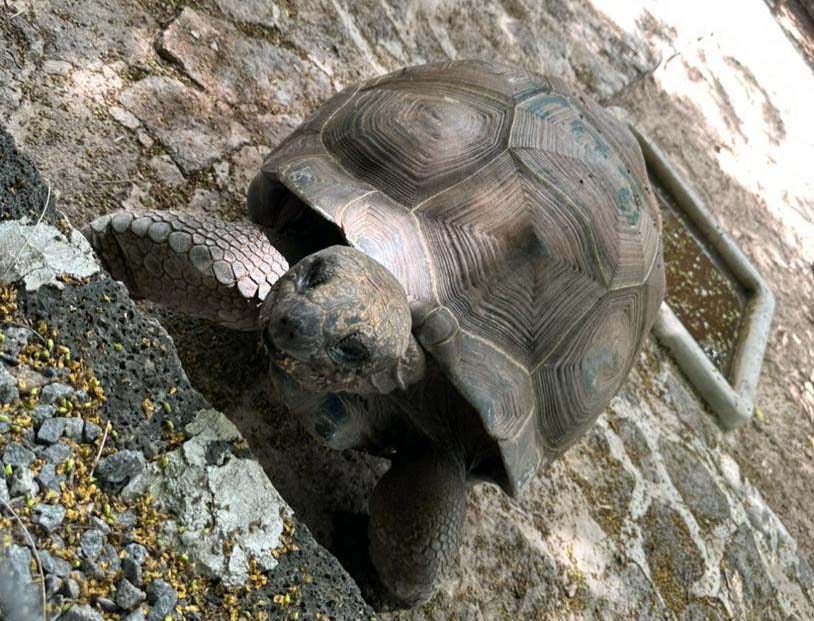
The slow pace and rocky path encouraged everyone to pause, share stories, and laugh together. Walking side by side, exchanging a word or offering a helping hand, reminded us that wellness is not only about workshops or lessons. Wellness also grows in small, everyday moments, as students connect with each other in meaningful, unhurried ways.
The walk ended at the Indian Ocean beach, where we shared lunch, soaked in the sun, and walked barefoot along the sand, creating memories and continuing to bond as a team while reflecting on the experiences of the week.
The beach was also full of stray cats and dogs, and those who love animals enjoyed playing with them, adding even more joy to our day.
Community Engagement and Farewell
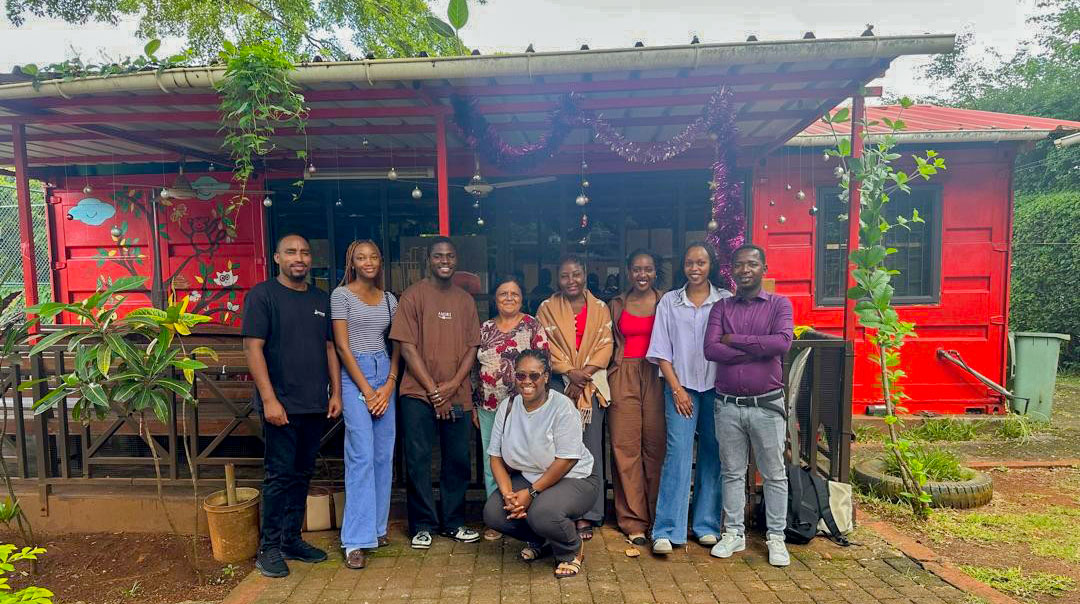
The final day, Friday, December 19th, focused on community engagement. We visited Lakaz Lespwar Caritas (Solitude), an NGO committed to the holistic development of the local community. The organization offers a range of services, including:
- Listening Services, providing a compassionate and attentive ear for individual concerns.
- Support Services, guiding people through challenges.
- Development Services, fostering growth and creating new opportunities.
This visit offered valuable insight into community-driven initiatives and the impact of integrated social support systems.
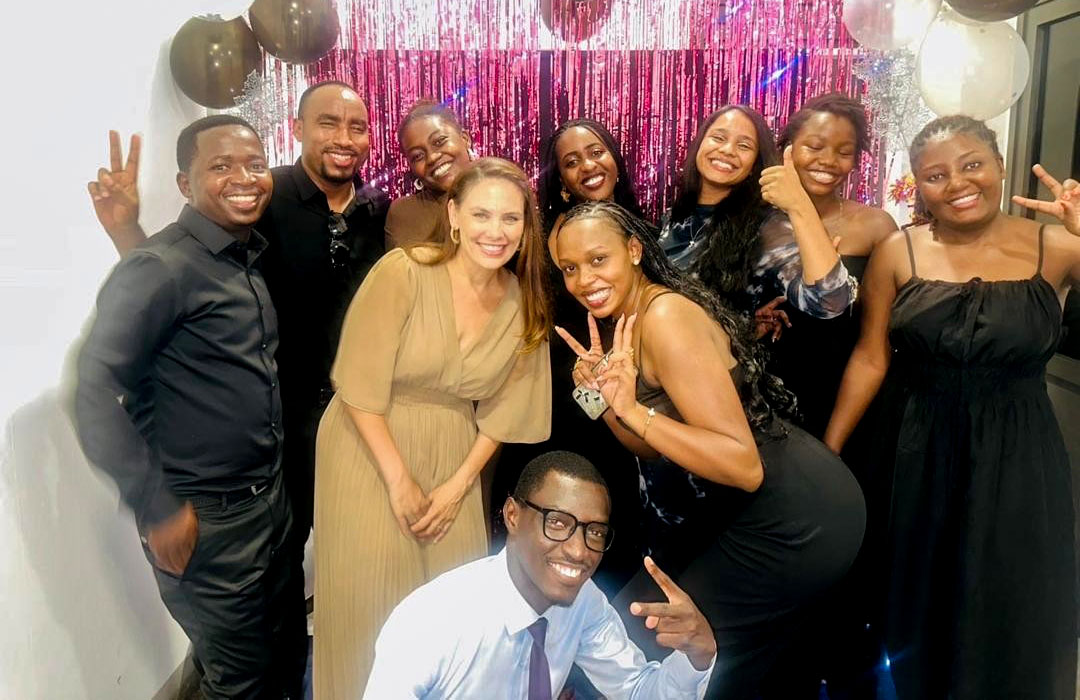
The week concluded with the Student Representative Council Homecoming Gala Dinner, a joyful celebration marking the end of Wellness Week. It was a moment to reflect, celebrate, and strengthen connections.
Reflections on Wellness Week
Wellness Week was more than a program; it was a transformative experience. From mental health discussions and hands-on training to physical activity, creative expression, and community engagement, every moment highlighted the importance of holistic wellness. Beyond learning, it was a week of connection, laughter, reflection, and personal growth, a reminder that wellness thrives when we nurture ourselves, engage with others, and connect meaningfully with our environment.
The trip was amazing and full of meaningful learning experiences. What I loved most was getting the chance to truly connect with the team. From our discussions and meetings to trips to the beach, shopping adventures, and sharing meals together, every moment gave us time to bond, reflect, and grow both as individuals and as a team.” Ishimwe Shalon a Solid Minds counseling Clinic staff member.
Final Thoughts: Embracing Holistic Wellbeing at ALCHE
During our closing debriefing with Dean Jeremy, he introduced theALU ALive to us. He described it as the guiding philosophy for Student Life at ALCHE, reflecting a holistic, student-centered approach that nurtures mind, body, relationships, and spirit. ALIVE empowers students to shape their wellness journey through engagement with both student-led initiatives and Student Life offerings, fostering personal growth while strengthening the campus community. Based on information available on the ALCHE/Student Life website, ALU ALive is anchored around five key pillars: MOVE, CONNECT, GIVE, UNPLUG, MAINTAIN/GROUND.
Wellness Week at ALCHE was more than a series of activities; it was a powerful reminder that student wellbeing must be intentional, holistic, and woven into everyday campus life. Throughout the week, I witnessed how movement, creativity, honest dialogue, nature, and community connection created safe spaces where students felt seen, supported, and empowered.
One key lesson is that wellness works best when students are active participants, not passive recipients. When given space to lead, reflect, and connect, they show resilience, empathy, and a deep willingness to support one another. These lessons extend far beyond ALCHE. Across universities, students face academic pressure, cultural transitions, and personal challenges that cannot be addressed by academics alone.
As the trip came to an end, Dr. JPN reflected on the journey and shared that the visit had been particularly unique. The university stood out for its distinctive character, with the current student community predominantly composed of Mastercard Foundation Scholars, all in their first year. This shapes a campus where much of the work, by staff, faculty, and partners, is intentionally focused on supporting the scholar community.
What was especially inspiring was seeing how intentionally ALCHE is grounding itself in a holistic approach to student life. Wellness is not treated as an add-on, but as part of the everyday campus experience. Experiencing this approach during the institution’s very first Wellness Week felt both promising and practical, a best practice that other university partners could learn from as they seek to embed wellbeing meaningfully into student life.
Wellness Week reaffirmed that nurturing the whole person mind, body, relationships, and purpose is essential for meaningful learning and leadership. When wellbeing is prioritized, students don’t just cope; they grow, connect, and thrive.