BYIRINGIRO PACIFIQUE

Mener avec Compassion : L’engagement de 2iE pour la Santé Mentale et le Bien-être Institutionnel

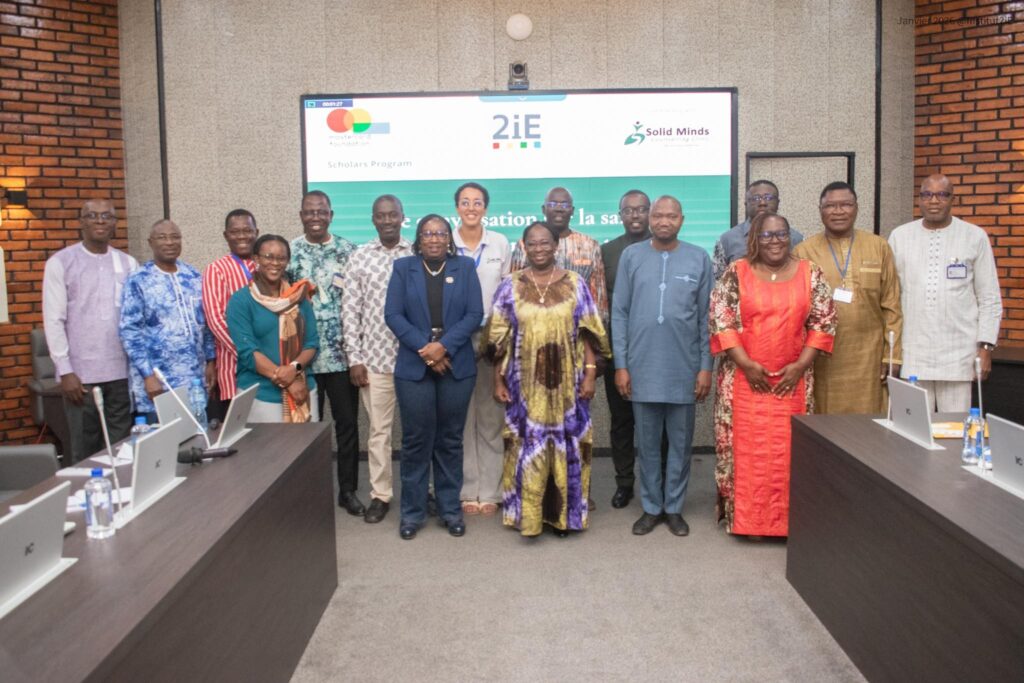
Mener avec Compassion : L’engagement de 2iE pour la Santé Mentale et le Bien-être Institutionnel   Revenir avec Intention : Une Collaboration Renforcée Du 19 au 23 janvier 2026, la Clinique en Santé Mentale Solid Minds s’est rendue à Ouagadougou, au Burkina Faso, pour sa quatrième visite à l’Institut International d’Ingénierie de l’Eau et de l’Environnement (2iE), l’un de nos précieux partenaires du Programme des Boursiers de la Fondation Mastercard. Alors que les précédentes missions étaient centrées sur les étudiants et les équipes techniques chargées de leur bien-être, cette visite a marqué un tournant significatif : pour la première fois, le Comité de Direction de 2iE a participé à un atelier d’une journée dédiée à la santé mentale en milieu professionnel. Ce moment fort s’inscrit dans le cadre de notre programme intitulé « Soutenir la Santé Mentale et le Bien-être des Boursiers, Alumni et Organisations Partenaires de la Fondation Mastercard », soulignant l’engagement croissant de 2iE à intégrer le bien-être mental au cœur du leadership et de la culture institutionnelle. Le Leadership au Centre : Quand les Visionnaires s’Engagent L’atelier a réuni plus de 12 hauts responsables de 2iE, dont le Directeur Général, le Professeur El Hadji Bamba DIAW, le Secrétaire Général Professeur Hamma YACOUBA ainsi que des directeurs de départements stratégiques. Leur participation active n’était pas que symbolique : elle témoignait d’une véritable vision. Alors que, dans de nombreuses institutions, la santé mentale reste confinée aux services étudiants, à 2iE, les dirigeants ont pris les devants.   Comme l’a exprimé le Professeur DIAW : “La santé mentale a longtemps été une notion floue et peu abordée dans notre contexte. Mais après cette session avec l’équipe de Solid Minds, nous en comprenons désormais toute la pertinence, non seulement pour le bien-être individuel mais aussi pour la réussite globale de 2iE. En tant que dirigeants, nous portons la responsabilité à la fois des opérations quotidiennes et de la vision à long terme de notre institution. Prendre soin de la santé mentale au travail n’est pas une option – c’est une nécessité. Nous sommes pleinement engagés à appliquer ce que nous avons appris et à renforcer notre collaboration avec Solid Minds pour bâtir une institution plus saine, plus solidaire et plus résiliente.” Ses mots illustrent une prise de conscience essentielle : la résilience institutionnelle repose sur une culture de sécurité psychologique, d’empathie et de soutien proactif. Faire grandir une culture de présence et d’attention : une semaine d’échanges riches et d’engagement holistique Au-delà de l’atelier historique avec le Comité de Direction, l’équipe de Solid Minds a animé une série de sessions avec différents acteurs de 2iE tout au long de la semaine. Nous avons échangé avec l’équipe technique du Programme des Boursiers de la Fondation Mastercard, impliquée au quotidien dans l’accompagnement des étudiants. Nous avons également collaboré avec l’équipe de Transition afin d’explorer comment intégrer la préparation émotionnelle et psychologique dans le modèle d’accompagnement post-diplôme de 2iE. L’alignement entre la réussite académique et la résilience mentale est essentiel, et nous saluons l’ouverture de 2iE à faire progresser ce chantier par l’apprentissage mutuel. Des sessions de groupe ont aussi été menées avec les étudiants boursiers, créant des espaces sécurisés pour réfléchir au bien-être émotionnel, à la gestion du stress et à l’auto-soin. Une session particulièrement significative a été organisée pour les étudiants en situation de handicap, réaffirmant notre engagement commun envers l’inclusion et le soutien personnalisé. Semer pour la Durabilité : L’Action des Pairs Aidants Un moment fort de cette visite fut notre atelier additionnel destiné aux étudiants souhaitant devenir pairs aidants. Développer des systèmes de soutien entre pairs est une étape clé pour bâtir une culture de bienveillance durable au sein du campus. Lorsqu’ils sont formés à reconnaître les signes de détresse, à offrir les premiers secours psychologiques, et à orienter vers les services appropriés, les étudiants deviennent des acteurs clés de la santé mentale institutionnelle. Par des échanges interactifs, les participants ont exploré le rôle du soutien entre pairs dans : La détection précoce des signes de mal-être mental L’offre d’un premier soutien émotionnel La création d’espaces inclusifs, bienveillants et préventifs Le lien avec les services académiques pour une aide professionnelle rapide “Des espaces comme celui-ci, où le dialogue ouvert est encouragé et chaque voix est respectée, sont essentiels. Pouvoir exprimer nos idées, nos doutes et nos besoins sans jugement favorise la connexion, la réflexion et un apprentissage continu.”— Chabi Soubo FARIDATOU, pair aidante en troisième année de bachelor technologique en énergies renouvelables et efficacité énergétique. “En ingénierie, nous comprenons que la pression fait partie du parcours. Cette formation a également été un rappel important des dispositifs d’accompagnement et des services mis en place par l’institution pour soutenir notre bien-être.” Kabore B. ABDOULAYE — Étudiant en Master 2 de génie de l’eau, de l’assainissement et des aménagements hydro-agricoles et représentant des étudiants à 2iE. Solid Minds continuera à offrir un appui technique et un mentorat à ce réseau croissant de pairs aidants. Nous croyons fermement que les initiatives menées par les étudiants – lorsqu’elles sont soutenues – génèrent des changements durables. Pourquoi l’Engagement du Leadership est Clé Chez Solid Minds, nous savons depuis longtemps que la santé mentale n’est pas qu’une affaire d’étudiants – c’est une question stratégique. Le leadership a le pouvoir d’ancrer des valeurs, de mobiliser des ressources et d’opérer de réels changements structurels. C’est pourquoi l’engagement de 2iE à ce niveau nous a tant inspirés. Quand les dirigeants priorisent le bien-être, ils : Normalisent les conversations sur la santé mentale Brisent les stigmas au sein de l’institution Permettent des interventions précoces et bienveillantes Alignent les valeurs de l’établissement avec une culture du soin Ce modèle d’engagement, fondé sur une impulsion stratégique portée par la gouvernance vers les collaborateurs et renforcée par une mobilisation active sur le terrain, est celui que nous souhaitons promouvoir au sein de l’ensemble de notre réseau de partenaires. Vision Partagée, Responsabilité Commune Notre engagement à 2iE s’inscrit dans un programme plus large soutenu par la Fondation Mastercard, couvrant actuellement 36 universités dans le

Mener avec Compassion : L’engagement de 2iE pour la Santé Mentale et le Bien-être Institutionnel Read More »

Leading with Compassion: 2iE’s Commitment to Mental Health and Institutional Wellness

Leading with Compassion: 2iE’s Commitment to Mental Health and Institutional Wellness   Returning with Purpose: A Deepening Engagement From January 19th to 23rd, 2026, Solid Minds Counselling Clinic returned to Ouagadougou, Burkina Faso, for our fourth visit to the International Institute for Water and Environmental Engineering (2iE)—one of our valued Mastercard Foundation Scholars Program partners. While previous engagements focused on scholars and technical teams supporting scholar well-being, this visit marked a powerful shift: for the first time, 2iE’s senior management team—its full “Comité de Direction”—participated in a dedicated, day-long mental health in the workplace workshop. This milestone moment came as part of our broader program aimed at “Supporting Mental Health and Wellness among Mastercard Foundation Scholars, Alumni, and Partner Organizations”, and signaled a deepening institutional commitment to integrating mental health and wellness into leadership practice and campus culture. Leadership at the Center: When Visionaries Show Up The full-day workshop brought together over 12 senior leaders, including the Director General, Professor El Hadji Bamba DIAW, the Secretary General Professor Hamma YACOUBA, and heads of key departments shaping the strategic direction of 2iE. Their presence was not only symbolic—it was visionary. For many institutions, conversations about mental health remain in the realm of student services or staff welfare committees. At 2iE, leadership stepped forward. As Prof. DIAW shared: “Mental health has long been an unclear and under-discussed concept in our context. But after today’s session with the Solid Minds team, we now see its relevance not only for individual well-being but also for the overall success of 2iE. As senior leaders, we carry the responsibility for both daily operations and the long-term vision of this institution. Supporting mental health in the workplace isn’t optional—it is essential. We are fully committed to applying what we’ve learned and strengthening our collaboration with Solid Minds to build a healthier, compassionate, and more resilient institution.” His words encapsulate the growing realization that institutional resilience depends on a culture of psychological safety, empathy, compassion and proactive mental health support. Building a Culture of Care: A Week of Holistic Engagement Beyond the historic leadership workshop, the Solid Minds team facilitated a week-long series of sessions with diverse stakeholders within 2iE. We met with the Mastercard Foundation Scholars Program technical team, who play a central role in the daily well-being of scholars. We also held focused discussions with the Transitions team to explore how emotional and psychological readiness can be embedded into 2iE’s post-graduation support model. The alignment between academic preparation and mental resilience is critical, and we left inspired by 2iE’s openness to further developing this area through shared learning and collaboration.Our team also facilitated group sessions with students and Scholars supported by the Mastercard Foundation Scholar Program, creating safe spaces to reflect on emotional well-being, stress management, and self-care practices. A particularly meaningful session was held with students with disabilities, reaffirming our joint commitment to inclusivity and personalized support. Planting Seeds of Sustainability: Peer Support in Action A standout feature of this visit was our two-day workshop for scholars and students interested in becoming peer support leads (“pair aidants”). Building peer support systems is a vital step toward creating a self-sustaining culture of care among students. When students are equipped to recognize signs of distress, offer psychological first aid, and refer peers to appropriate services, institutions become more compassionate and responsive.Through interactive training, students explored what mental health is and the role of peer support in: Detecting early signs of mental distress Providing emotional first-line support Creating inclusive and judgment-free zones Bridging connections with the Student and Academic Affairs Departments for timely professional help Here are some insights shared by participants:  “Spaces like this, where open dialogue is encouraged and every voice is respected, are essential. The ability to share our views, questions, and ideas without judgment support ongoing connection, reflection and continuous learning.”       Chabi Soubo FARIDATOU— A peer supporter in her third year of technological bachelor’s degree on renewable energy systems and energy efficiency. “In engineering, we understand that pressure is part of the journey. This training also served as an important reminder of the support systems and services the institution has put in place to support our well-being.”   Kabore B. ABDOULAYE — Master’s student (Year 2) in Water Engineering, Sanitation, and Hydro-Agricultural Development, and Students Guild President at 2iE. Solid Minds will continue to offer technical guidance and mentorship to this growing network of peer supporters. We believe strongly that student-led initiatives—when supported and resourced—create lasting change. Why Engaging Senior Leadership Matters At Solid Minds, we’ve long understood that mental health isn’t only a student matter—it’s a strategic matter. Leadership holds the power to shape values, unlock resources, and drive systemic transformation. That’s why 2iE’s engagement with mental health at the highest level was so inspiring. When leaders prioritize wellness, they: Normalize conversations about mental health Break stigma across the institution Empower teams to intervene early and compassionately Align institutional values with a culture of care This model of top-down commitment paired with grassroots action is one we hope to advocate for and sustain across our broader partner network. Shared Vision, Shared Responsibility Our engagement at 2iE is part of a wider Mastercard Foundation-supported program, currently spanning 36 universities globally, including 24 across Africa and 12 others across Europe, North America, Central America, and the Middle East. At each partner institution, we work to embed mental health and wellness as a cornerstone of scholar success, staff empowerment, and organizational health.What we experienced at 2iE exemplifies what’s possible when commitment meets collaboration. By involving technical teams, scholars, and senior executives, 2iE has embraced a whole-institutional approach to mental health and wellness.Together, we are shaping campuses where mental health is not a reactive service, but a strategic priority intertwined into leadership, operations, and learning environments. Looking Ahead: Deepening the Roots We are deeply grateful for the openness, hospitality, and vision demonstrated by 2iE during this visit. From senior-level dialogue to peer support design, the partnership has laid a strong foundation for deeper integration of mental health and

Leading with Compassion: 2iE’s Commitment to Mental Health and Institutional Wellness Read More »

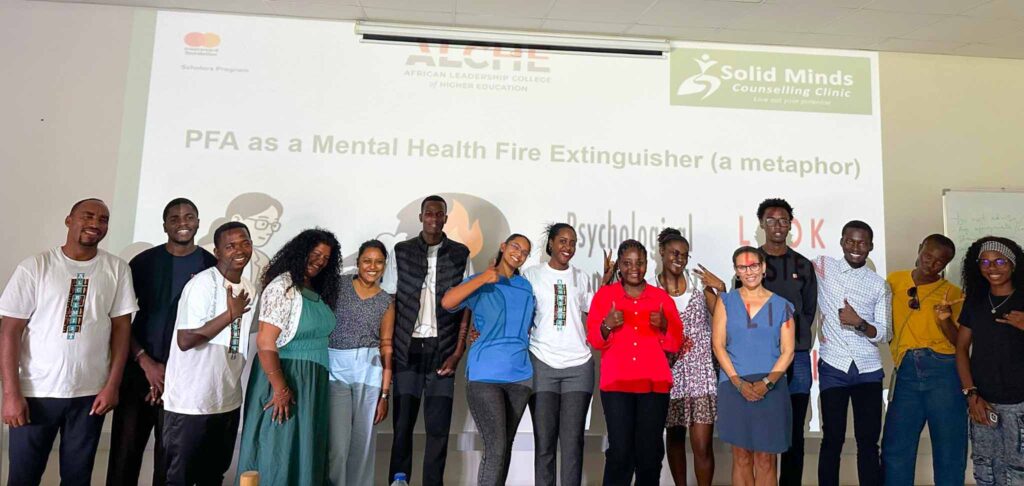
The Solid Minds team, ALCHE staff, and students after completing the Psychological First Aid training.

Solid Minds at ALCHE’s First Wellness Week: A Transformative Journey in Holistic Student Wellness

Solid Minds at ALCHE’s First Wellness Week: A Transformative Journey in Holistic Student Wellness During the week of December 15–19, 2025, Solid Minds Counselling Clinic partnered with the African Leadership College of Higher Education (ALCHE) for the institution’s first-ever Wellness Week—an immersive initiative designed to promote mental health, wellbeing, and community connection among students. This collaboration was made possible through both institutions’ partnerships with the Mastercard Foundation, which advances holistic student support across the continent. The week brought together students, interns, staff, counselors, faculty, university leadership, and external partners in a co-created experience that recognized students not just as beneficiaries of wellness programming, but as active contributors, leaders, and partners in shaping a healthier campus culture. Mauritius: A Vibrant Context for Wellness Week ALCHE, with about 180 students currently enrolled across four undergraduate programs BSc. Entrepreneurial Leadership, BSc. International Business and Trade, BSc. Computer Science, and BSc. Software Engineering places strong emphasis on holistic development and leadership. The student community thrives in a multilingual and ethnically diverse environment, where local students Indo‑Mauritians, Creoles, Sino‑Mauritians, and Franco‑Mauritians interact with international students from various African countries, creating a rich and vibrant mix of cultures. Kicking Off Wellness Week The Wellness Week was officially opened by ALCHE Dean, Jeremy Ruiters, whose thought-provoking address set a powerful tone for the entire week. He reminded participants that “if you don’t make time for wellness, you will be forced to make time for your illness,” a message that resonated deeply with everyone present. Following the opening, a Fireside Chat and Multidisciplinary Panel Discussion on Youth Mental Health brought together experts from different fields to explore key issues affecting young people today, including social media use, stigma, and anxiety. The session featured: Jean Pierre Ndagijimana ( Dr. JPN), Senior Regional Manager of Strategy and Partnerships at Solid Minds Counselling Clinic Ms. Joann Davenia Permall, Lecturer at the Mauritius Institute of Education specializing in Pedagogy and Philosophy of Education. Nazeerah Golamnobee-Foondun, Pedopsychiatrist at the Ministry of Health and Wellness of Mauritius. The discussions were lively and interactive, with participants engaging deeply through thoughtful questions, highlighting that wellness is not only a personal responsibility but also a collective effort shaped by dialogue, understanding, and shared learning. Psychological First Aid: Equipping for Impact On December 16th, the Solid Minds Counselling Clinic team facilitated a Psychological First Aid (PFA) training. Normally conducted over three days, we condensed the essentials into a half-day session. Topics  included mental health, stress, trauma, and the three core principles of PFA look, listen, and link.. To make the session engaging, icebreakers were included, bringing the training to life. This part of the program is always a hit, consistently engaging all attendees and fostering a positive, collaborative environment.  The session was highly interactive, with participants engaging in group activities that simulated real-life scenarios. At the end, one participant shared: “…..so much I learned. It was beyond my expectations. I learned how to better support myself first as a PFA, and then others who need immediate support.” The energy and enthusiasm in the room were palpable, and it was rewarding to see participants leave with practical skills they could immediately apply. Fun and Mindfulness: Moving Beyond the Classroom Wednesday, December 17th, combined fun, movement, and mindfulness. The morning began with a Karate session, led by school counselor Gianeswaree Caully and a coach, both black belts. At first, the idea of Karate in a wellness program seemed surprising to me, but it quickly became clear how it connected to wellness. The session offered a full-body workout, laughter, and confidence-building, demonstrating that wellness encompasses both mental and physical health. By the end, participants felt empowered, exhilarated, and exhausted in the best possible way. The karate session was exciting! It taught me not only how to defend myself physically but also how to stay calm, focused, and resilient under pressure. As the karate session concluded,, Damien Niyonsaba, a psychiatrist nurse at Solid Minds shared, reflected, “I feel more confident handling challenges, both mentally and physically” Later, we experienced Mindfulness through Drama, led by Joan Davenia Permall, Lecturer at the Mauritius Institute of Education specializing in pedagogy and Philosophy of Education. This innovative technique combines mindfulness practices with theatrical exercises to help participants become more present, self-aware, and emotionally expressive. Activities ranged from playful movements and running to quiet reflection and sharing in a circle. Participants were encouraged to connect with their emotions freely, illustrating that safe spaces are best created through experience and interaction, not just theory. To help us better understand the exercises, the facilitator explained: “Drama is often mistaken for theatre, but it is much more than performance; it is a reflection of the human experience. Drama engages people with themselves on every level, offering an excellent way to understand holistic education. It exercises the mind, memory, and cognition, while also fostering emotional connection and self-awareness. Drama encourages participants to explore their feelings: what they feel, why they feel it, how they usually express it, and how they might choose to express it differently. It gives people the opportunity to shape and reshape their being through their emotions and experiences.” — Joan Davenia Permall What Joan enjoys most about drama is how it repositions the body, which is especially valuable since we spend so much time sitting in school chairs often to our detriment. Through mindfulness through drama, there are no chairs; participants can move freely, relax their bodies, and fully engage in the experience. This session reminded me that we often don’t take enough time to truly appreciate ourselves or connect with who we are. For me, this was a moment of connecting and reconnecting with myself. We began with a game celebrating our names. Usually, we say our names in a formal or casual way, but this exercise turned it into a celebration of who we are. Drama, for me, became a way of connecting my mind, my being, and my feelings. During the exercises, we imagined walking through elements of nature, and our bodies responded

Solid Minds at ALCHE’s First Wellness Week: A Transformative Journey in Holistic Student Wellness Read More »